Sign up to my weekly newsletter for latest posts & updates!
Plus, I'll send you a free copy of the eBook I wrote on travelling with insulin :)
Thank you for joining the community! :) To receive your free download, you will need to confirm your subscription via the email I have just sent to you. If you can't see this in your inbox, please check your spam folder.If you have any issues, please email me personally at: thatdiabeticgirlblog@gmail.com
Oops! Something went wrong while submitting the form.
Svalto Cooler Pro Review: Is This Insulin Mini Fridge Worth It?
Written By:
Cazzy Magennis
Last Updated:
September 7, 2026
An honest Svalto Cooler Pro review by a type 1 diabetic, covering cooling performance, battery life, insulin capacity, travel use, pros & cons...
This post may contain affiliate links. If you click and buy through one of these then we may receive a small commission, at no added cost to you (more info here). All information on this website is subject to this disclaimer.
Keeping insulin properly refrigerated while travelling can be an absolute pain.
Ice packs melt. Hotel fridges can be unreliable. Not every plane has a power supply.
And even when you do find a fridge, there is always the worry that your insulin could accidentally freeze.
So when Svalto offered to send me its Cooler Pro to test, I was very intrigued.
Unlike a basic insulin cooling pouch, the Svalto Cooler Pro works like a portable mini fridge for your medication.
It uses active cooling, displays the current temperature inside the chamber and can run completely cordless using removable batteries.
On paper, it sounds like a brilliant solution for travelling with refrigerated insulin.
But how well does it actually work? How much insulin can it carry? And is it something I would trust on a long-haul flight?
I’ve been testing it with my own insulin to find out.
In this Svalto Cooler Pro review, I’m going to take you through how it works, what fits inside, how quickly it cools, its battery life, the pros and cons, and whether I think it is worth buying.
Disclaimer: Svalto gifted me this product to review. However, all opinions and experiences in this review are completely my own. I
Quick verdict: is the Svalto Cooler Pro worth it?
My initial impression of the Svalto Cooler Pro is very positive.
It feels premium, cools down quickly and gives you much more control than a standard insulated pouch or gel cooling case.
The biggest benefit is that it can actively refrigerate your insulin while running completely cordless.
My version came with two removable batteries, providing a claimed combined runtime of around 14 to 18 hours. For me, that would cover almost any long-haul flight I am likely to take.
I also love being able to see the chamber temperature on the front display. When you are carrying medication as important as insulin, having an actual temperature reading provides much more reassurance than simply hoping an ice pack is still cold.
However, there are a few things to be aware of.
The device can be set as low as 0°C, despite the usual refrigerated storage range for insulin being between 2°C and 8°C. Thankfully, the touchscreen can be locked once you have chosen your temperature, but I still think the minimum setting should ideally be 2°C.
It is also important to understand that its cooling ability depends on the surrounding temperature. According to Svalto, the Cooler Pro typically cools approximately 15°C below the ambient temperature when using a battery. Therefore, I would be more confident using it inside an airport, aircraft, hotel or other room-temperature environment than leaving it in extreme outdoor heat.
So far, I think it could be a brilliant portable insulin fridge for flights, road trips and travel days.
Svalto is a company producing portable cooling products for insulin, GLP-1 medications and other temperature-sensitive injectable medicines.
The main difference between Svalto and many traditional insulin coolers is that its products use active thermoelectric cooling.
This means the Cooler Pro is actively trying to reach and maintain a chosen temperature rather than simply slowing down how quickly your insulin warms up.
The company currently offers several versions and kits, including a plug-in-only option and battery-powered kits designed for travel.
I was sent the Svalto Cooler Pro Long-Haul Kit, which includes two removable Power Cells.
What is the Svalto Cooler Pro?
The Svalto Cooler Pro is a portable refrigerator designed for insulin pens, insulin vials, GLP-1 pens and other refrigerated medication.
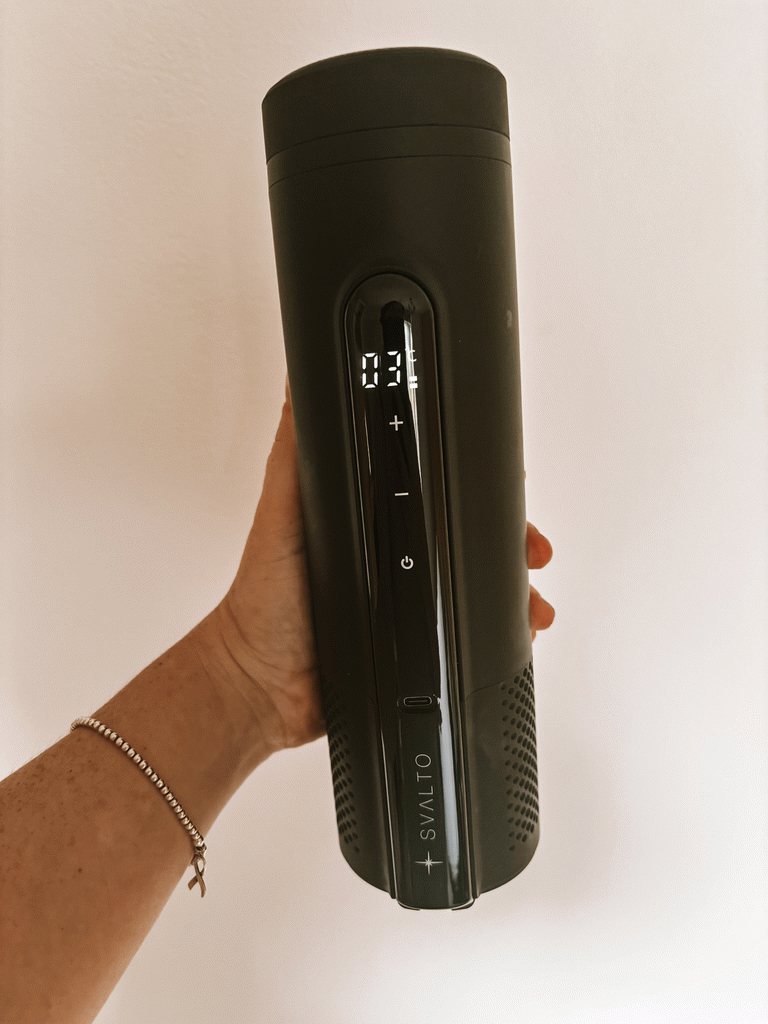
It has a cylindrical refrigerated chamber with a digital temperature display and touchscreen controls on the front.
You choose your target temperature, place your medication inside and the device actively cools the chamber.
The Cooler Pro can be powered in two ways:
Cordlessly using one of Svalto’s removable Power Cells
Directly from a USB-C power source, including a wall plug, car, laptop or power bank
Each Power Cell is advertised as providing approximately 7 to 9 hours of cordless cooling. If you have two batteries, as I do, that gives you a combined claimed runtime of around 14 to 18 hours.
That is what makes the Pro version particularly interesting for travel.
You are not relying on finding a plug socket throughout your journey, and if the first battery runs out, you can remove it and insert a fully charged replacement.
What comes in the box?
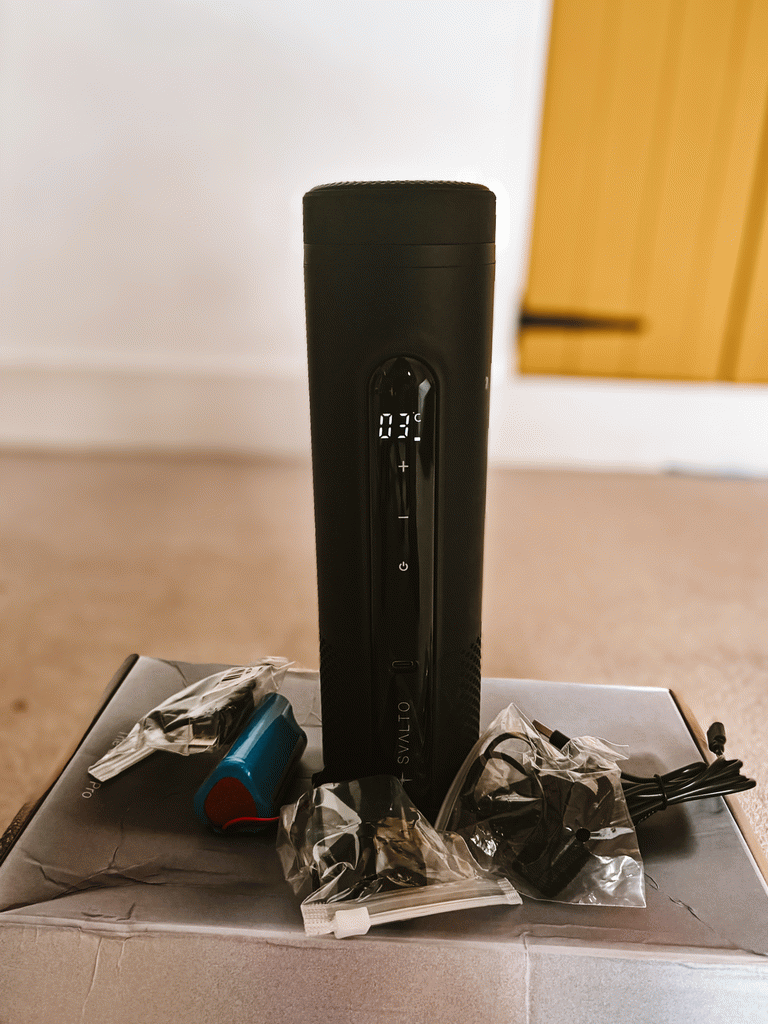
My Svalto Cooler Pro box included:
The Svalto Cooler Pro
Two removable Power Cell batteries
A USB-C power cable and wall adapter
A separate battery charging cable
A crossbody travel sleeve
A quick-start guide
The exact contents will depend on which kit you purchase.
The Essential Kit is designed for plug-in cooling and does not include a Power Cell. The Travel Kit includes one battery, while the Long-Haul Kit includes two.
For travelling, I personally think the removable batteries are one of the biggest reasons to choose this product in the first place.
My first impressions of the Svalto Cooler Pro
My first thought when I removed the Svalto Cooler Pro from the box was that it looked surprisingly slick.
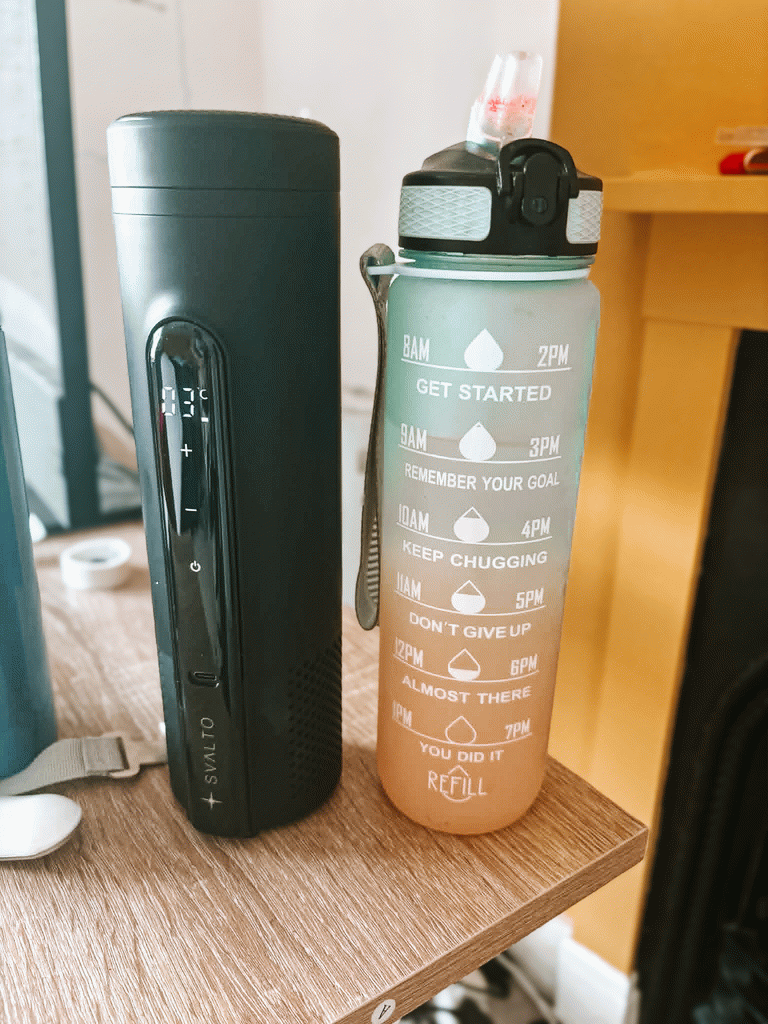
It is approximately the same sort of size as the 4AllFamily insulin cooler and is similar in overall size to a 32 oz water bottle.
It is certainly not tiny, but I also would not describe it as excessively bulky considering it is essentially a portable refrigerator.
My model is the Onyx Black version.
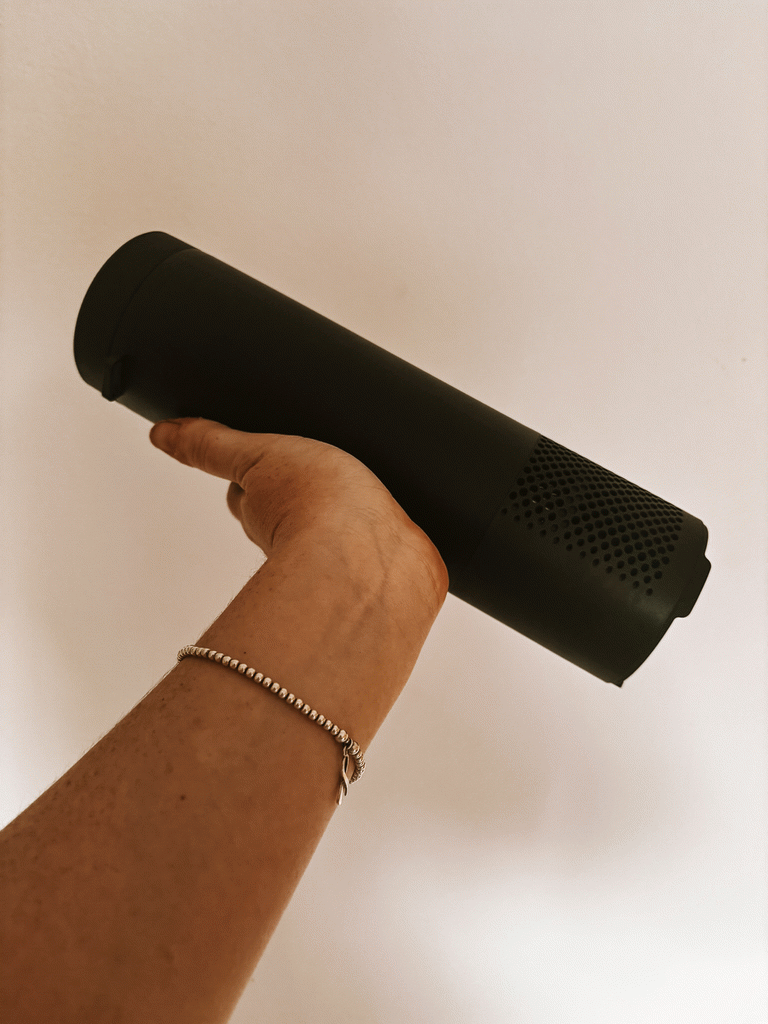
It has a matte black finish which, in my opinion, makes it look quite premium. It looks more like a high-end drinks bottle or piece of travel technology than an obvious medical device.
Svalto currently also lists a lighter Titanium colour on its website, but I personally really like the black.
The Cooler Pro weighs approximately 900 grams before you add your medication, so it does have some weight to it. However, it also feels solid and well-made rather than cheap or flimsy.
How easy is it to set up?
It took me a few minutes to work out exactly how to insert the battery.
I found it a little fiddly the first time, mainly because I was not immediately sure how everything was supposed to sit beneath the base cap.
However, once I worked it out, it was actually very simple.
You open the cap at the bottom, place the battery inside, connect it and refit the cap.
As soon as I connected the battery, the Cooler Pro started working.
You can then use the touchscreen on the front to choose your target temperature. The display shows the measured temperature inside the chamber alongside a battery-level indicator.
Once you know where everything goes, the whole setup process only takes a minute or two.
I certainly would not describe it as complicated, but I would recommend setting it up and practising changing the battery before relying on it during a flight.
How quickly does the Svalto Cooler Pro get cold?
This was one of the things that impressed me most during my initial test.
When I first switched the Cooler Pro on, the temperature display read approximately 18°C.
Within around ten minutes, it had already dropped to approximately 10°C.
It continued getting colder from there.
That is a very quick initial drop and immediately made me think this could be effective for keeping insulin refrigerated in normal room-temperature environments.
Svalto recommends allowing approximately one hour for the chamber to become fully cold before loading your medication for a journey. I think that is sensible, even if the display enters the refrigerated range much sooner.
It is also worth noting that the temperature on the display represents the temperature measured inside the chamber. Your insulin itself may take longer to reach the same temperature, especially if you put it into the cooler while it is still warm.
Therefore, I would switch the Svalto on well before leaving home rather than loading warm insulin and immediately heading to the airport.
Battery life and cordless cooling
The removable batteries are probably the standout feature of the Svalto Cooler Pro.
Each 10,200 mAh Power Cell is advertised as providing around 7 to 9 hours of cordless cooling under typical conditions.
My box came with two batteries, giving me a claimed total of approximately 14 to 18 hours.
That should cover me for pretty much any long-haul flight I take.
If I need even more time, additional Power Cells can be purchased separately. In theory, you could carry as many charged batteries as you need for your journey.
However, the actual runtime can vary depending on factors such as:
The surrounding temperature
How frequently you open the cooler
Your chosen target temperature
Whether the batteries have completed their first few charging cycles
The hotter the surroundings are, the harder the cooler must work and the faster the battery may run down.
There is also only one battery compartment, so the batteries do not switch automatically. When one runs out, you must remove it and insert the next one.
Cooling briefly pauses while you do this, but the chamber is insulated and changing a battery should take less than a minute once you are familiar with it.
How do you charge the Svalto batteries?
Each Power Cell is charged separately using the dedicated battery charging cable included in the box.
You connect the battery to the cable and then plug it into a USB power source, such as a wall adapter, laptop, car socket or power bank.
The indicator light shows red while the battery is charging and turns green when it is fully charged.
According to Svalto, charging an empty battery takes approximately 6 to 7 hours.
Importantly, plugging a USB-C cable into the main Cooler Pro unit does not charge a battery fitted inside it. The port on the cooler powers the refrigeration system itself.
To run it directly from USB-C, you remove the Power Cell, replace the base cap and then connect the cooler to your chosen power source.
This means you can have one battery charging separately while another battery is powering the cooler.
I have not needed to charge my batteries yet, but I will update this review once I have completed several full charging and runtime tests.
The touchscreen and temperature controls
The temperature display is one of my favourite features.
You can instantly see the current temperature inside the cooler without opening it or using a separate thermometer.
The controls are also very responsive. You simply use the plus and minus buttons to choose your preferred temperature.
However, I initially had one fairly significant concern.
The Cooler Pro can be set anywhere between 0°C and 18°C.
Unopened insulin is generally stored in a refrigerator between 2°C and 8°C, depending on the manufacturer’s instructions. Insulin should never be allowed to freeze.
Because the touchscreen is quite sensitive, I was worried that I could accidentally knock the setting down to 0°C while carrying it.
I tested the 0°C setting using an old vial containing only a small amount of insulin. It became extremely cold and did not visibly freeze, but I would not use that as proof that insulin is safe at this temperature.
Thankfully, the touchscreen has a lock function.
Once you have selected your target temperature, double-tap the power button to lock the controls. You double-tap it again when you want to unlock them.
This prevents the plus and minus controls from being accidentally pressed inside your bag.
That solves most of my practical concern, but I would still prefer the lowest available setting to be 2°C. There is no real reason I would personally want to set my insulin cooler to 0°C, and having that option introduces an unnecessary risk if someone forgets to lock the screen.
My advice would be to set it to around 4°C or 5°C, lock the controls and regularly check the display.
You should also always follow the storage instructions for your particular insulin or medication.
The Svalto Cooler Pro has a small fan, so I expected it to make a noticeable humming noise, similar to a mini fridge.
However, it is surprisingly quiet.
You can hear a very light fan noise when you are close to it, but it is not loud or distracting.
I would have no concerns about using it beside me on a plane, train or in a hotel room overnight.
This might sound like a small detail, but I would quickly become annoyed by a loud fan during a 12-hour flight!
What is the travel bag like?
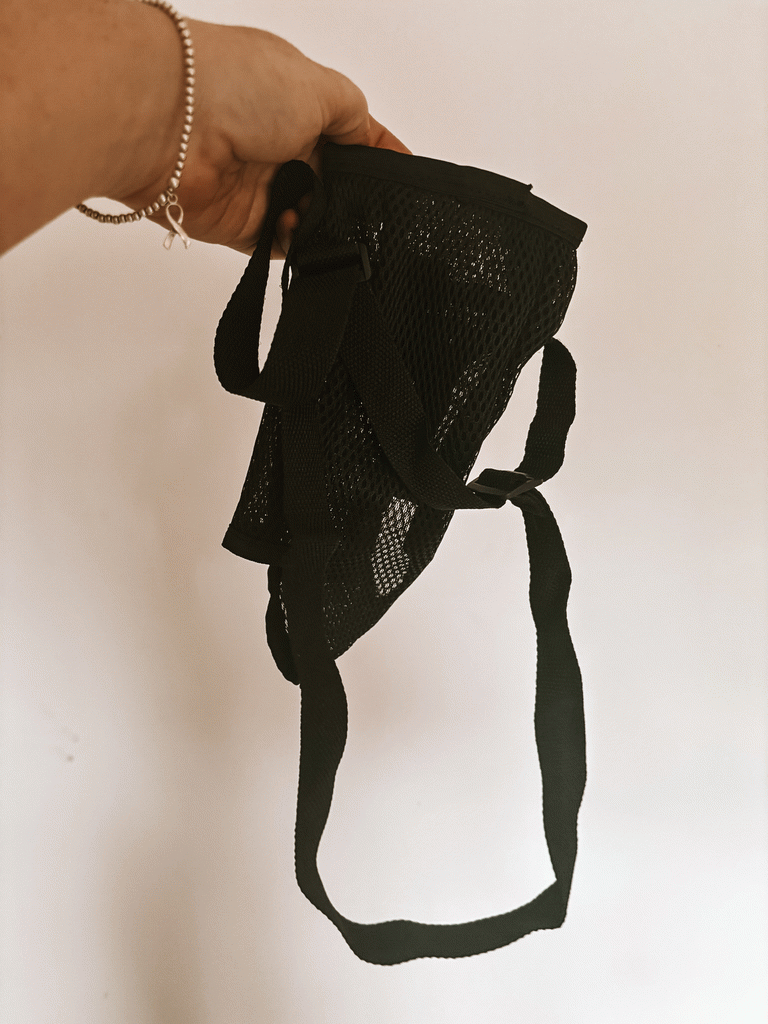
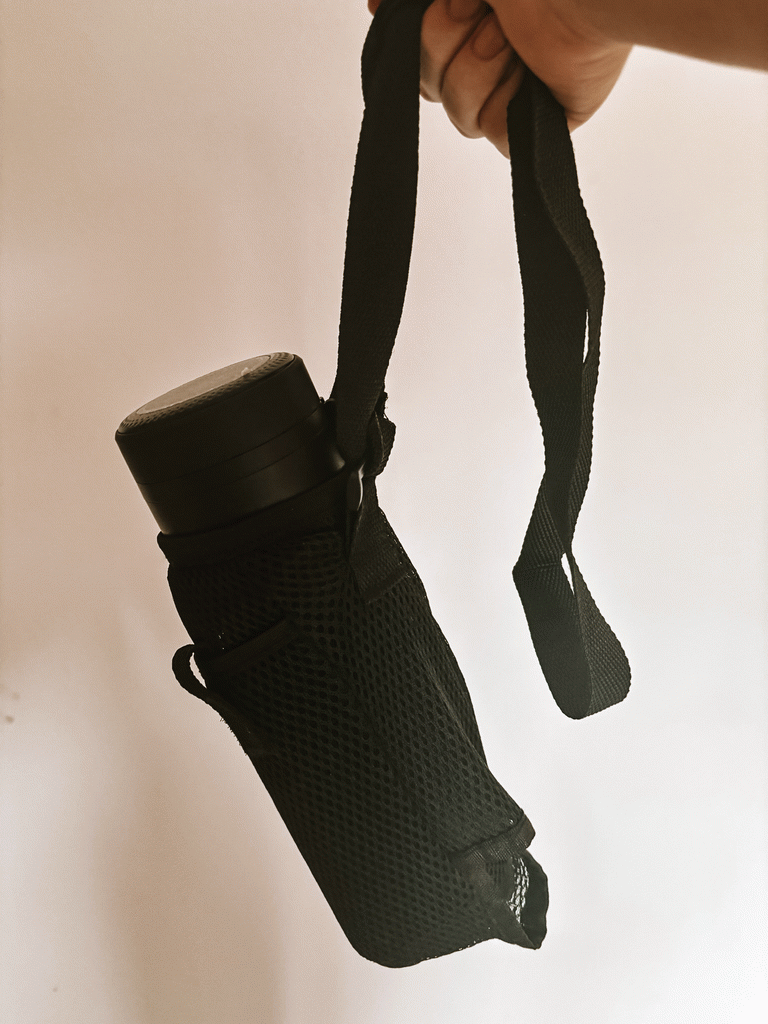
My cooler came with a crossbody travel sleeve.
It has breathable mesh material, which is important because the vents around the base of the cooler need airflow.
You should not wrap the Cooler Pro in a towel or place it inside a tightly sealed bag while it is running, as this could restrict the ventilation.
The travel sleeve makes it easier to carry the cooler separately and helps ensure that the vents remain exposed.
However, I do think the strap could be more comfortable.
The material is not especially soft and there is no padded shoulder section. If I were wearing it continuously for several hours, I think it could start to feel uncomfortable.
Personally, I probably would not carry it on my shoulder all day. I would be more likely to keep it safely inside my hand luggage while making sure the ventilation remained clear.
So the sleeve is useful, but I think a small padded shoulder section would improve it.
How much insulin fits inside the Svalto Cooler Pro?
I tested the Svalto Cooler Pro with both my Humalog insulin vials and a mixture of Humalog and Lantus pens.
And honestly?
It holds quite a lot of insulin!
How many insulin vials does it hold?
I managed to fit eight unboxed 10 ml Humalog vials inside the cooling chamber.
They were packed quite tightly, so this is probably the absolute maximum I would personally try to carry.
However, there is something important to consider when carrying glass insulin vials.
If you only have a few vials inside, there is room for them to move around. This means the glass bottles could potentially knock against each other or against the metal interior of the cooling chamber.
I cannot say whether this would definitely cause one to break, but it is not a risk I would personally want to take with my insulin.
A simple solution would be to use small silicone protective cases designed for 10 ml insulin bottles.
These help protect the glass from knocks and are useful in almost any insulin cooling case where multiple vials could move around.
Obviously, adding silicone covers will make each vial slightly wider, so you probably will not fit all eight inside once they are protected. I would happily sacrifice some capacity for the added protection.
You could also add a small amount of soft padding between the vials, provided it does not block the cooling chamber or prevent the lid from closing properly.
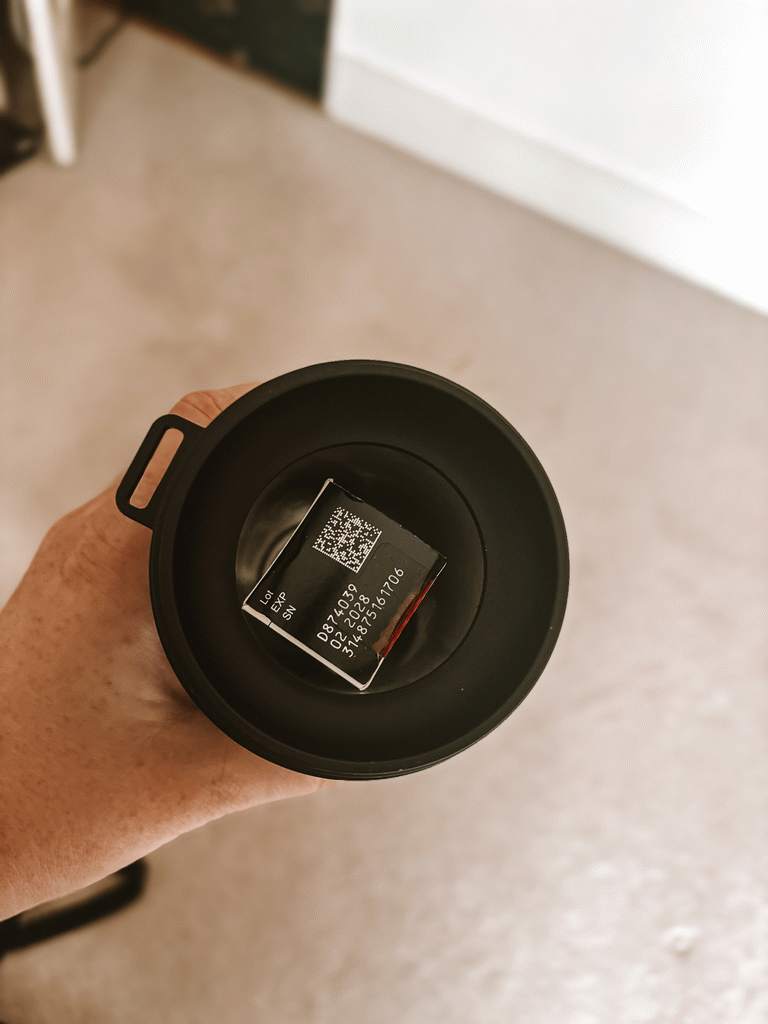
If you prefer to keep your insulin inside its original packaging, I was able to fit two fully boxed 10 ml insulin vials inside the cooler.
That is a lot less insulin than carrying the vials without their boxes, but the boxes provide additional protection and keep the insulin together with its original pharmacy information.
For me, two 10 ml Humalog vials could still cover a reasonably long trip, depending on my insulin requirements at the time.
How many insulin pens does it hold?
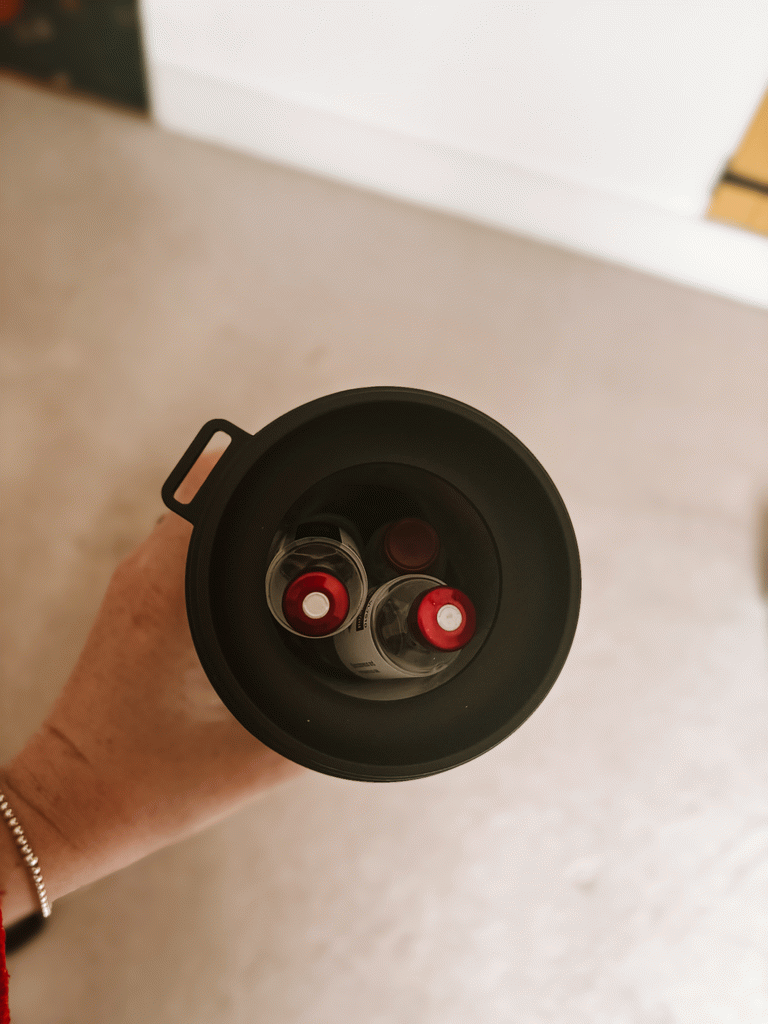
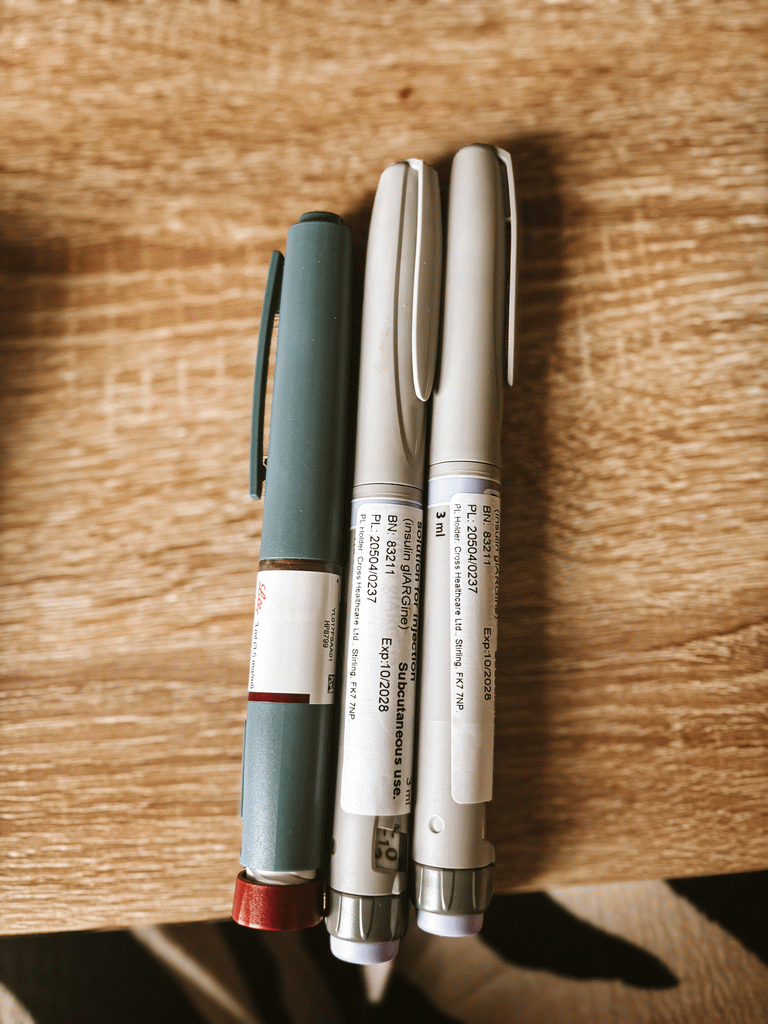
I also tested the Svalto with my 3 ml Humalog and Lantus insulin pens.
My sizes for reference
The two pens are a similar size, although my Lantus pens are slightly taller and have a slimmer profile than the Humalog pens.
At maximum capacity, I managed to fit:
Four Lantus pens
Two Humalog pens
That gave me a total of six insulin pens, although they were packed quite tightly.
For a slightly less crowded fit, I could carry:
Three Lantus pens
Two Humalog pens
That gave me five insulin pens with a little more room to breathe.
Based on my testing, I would say the realistic capacity is approximately five to six standard insulin pens, depending on their exact shape and size.
This is important because not every insulin pen has the same dimensions. Wider pens and chunky single-dose injectors will reduce the total number you can carry.
Unlike insulin vials, I am less concerned about the pens knocking together because the insulin cartridges are already protected by the plastic pen bodies.
However, I still would not force them inside or pack the chamber so tightly that removing one becomes difficult.
My realistic capacity verdict
Although eight unboxed 10 ml vials physically fit, I do not think maximum capacity is necessarily the best way to use the Svalto.
For practical travel, I would personally be more comfortable carrying:
Fewer vials protected with silicone covers
Two vials inside their original boxes
Around five insulin pens with enough space to remove them easily
Depending on how much insulin you use, it could potentially carry enough refrigerated insulin for a long trip rather than simply covering a flight or day out.
Of course, everyone’s insulin requirements are different, so you should always calculate how much you personally need and bring additional spare insulin where possible.
Can you carry insulin vials and pens together?
Yes, and this may actually be the most useful setup for many people with diabetes.
For example, someone using an insulin pump may travel with insulin vials for filling their pump, alongside insulin pens as an emergency backup in case the pump fails.
I tested a mixed combination and comfortably fitted:
Two 10 ml insulin vials
Two insulin pens
There was still a little space available, and I think I could have squeezed in one additional vial if needed.
This gives you a realistic mixed capacity of two pens and two to three 10 ml vials, depending on how tightly you want everything packed.
Personally, I think two vials and two pens is the better setup because everything fits comfortably and is easier to remove.
However, I would still recommend using silicone protectors on any unboxed glass vials to stop them knocking against the pens or the metal chamber.
This mixed setup makes the Svalto particularly useful for insulin pump users who want to keep their main insulin supply and emergency backup pens refrigerated together.
The biggest limitation: performance in very hot temperatures
This is something I think anyone considering the Svalto Cooler Pro needs to understand.
The device cools relative to the surrounding air temperature.
According to Svalto’s current specifications, it typically cools approximately 15°C below the surrounding temperature when powered by a Power Cell.
When connected directly to USB-C, that increases to approximately 15°C to 20°C below ambient temperature.
That means the Cooler Pro may not always maintain the full 2°C to 8°C refrigerated range in very hot conditions.
For example, if the surrounding temperature reached 30°C, the cooler might only reach approximately 15°C while running from a battery.
That does not make it useless. It could still help protect insulin from dangerous heat, and many types of insulin can be kept at room temperature for a limited period once in use.
However, room-temperature protection and proper refrigerated storage are not the same thing.
Based on what I have tested so far, I see the Svalto Cooler Pro as being particularly useful for:
Airports and aircraft cabins
Long-haul flights
Air-conditioned trains and coaches
Road trips
Hotel rooms
Normal indoor temperatures
Travel days where access to a fridge is limited
I would be more cautious about relying on it as my only refrigerated storage solution during an extremely hot outdoor day.
I plan to test this further in different ambient temperatures and will update this review with my results.
Benefits of the Svalto Cooler Pro
1. It actively refrigerates your insulin
This is not simply an insulated pouch.
The Svalto actively lowers the chamber temperature and attempts to hold the temperature you select.
2. It can run completely cordless
The removable batteries make it genuinely practical for flights, trains, car journeys and other situations where you cannot depend on having a plug socket.
3. The batteries are swappable
When one battery runs out, you can replace it with another.
You can also purchase extra batteries if you need longer cordless cooling.
4. You can see the current temperature
I love having an actual digital temperature reading.
It removes a lot of the guesswork involved with traditional cooling pouches and ice packs.
5. It cools quickly
In my initial test, the displayed chamber temperature fell from around 18°C to 10°C in approximately ten minutes.
6. It looks and feels premium
The matte black finish looks slick, and the device feels solid and well-made.
7. It is surprisingly quiet
The fan produces only a very light noise and should not be distracting during a journey.
8. You do not need ice packs
There is nothing to freeze, soak or replace during the journey.
For me, that removes one of the biggest stresses associated with travelling with refrigerated insulin.
9. It holds a surprisingly large amount of insulin
I was impressed by how much insulin I could physically fit inside the cooling chamber.
It held up to eight unboxed 10 ml Humalog vials or approximately five to six insulin pens, depending on the combination of Humalog and Lantus pens.
I would not necessarily recommend packing eight unprotected glass vials together, but the available capacity makes the Cooler Pro useful for much more than a single day out.
Cons of the Svalto Cooler Pro
1. It can be set to 0°C
This is my main concern.
Although the controls can be locked, I would prefer the minimum available setting to match the usual 2°C lower limit for refrigerated insulin.
2. Its cooling ability depends on the ambient temperature
It may not maintain 2°C to 8°C in very hot environments, particularly when running from a battery.
3. The battery was initially fiddly to install
It became much easier once I knew what I was doing, but the first attempt took me a few minutes.
4. The shoulder strap could be more comfortable
The breathable design makes sense, but some additional shoulder padding would improve it.
5. It is heavier than a basic cooling pouch
At around 900 grams before adding medication, this is not the lightest insulin cooling option.
You are essentially carrying a portable refrigerator, so there is inevitably a trade-off between cooling performance and weight.
6. Glass vials may need additional protection
The interior cooling chamber is metal, and unboxed insulin vials are made from glass.
If you are only carrying a few vials, they may be able to move around and knock against each other or the side of the chamber.
I would personally use silicone vial protectors or another suitable form of protection. However, doing so will reduce the number of vials you can fit inside.
It looks premium, cools down quickly, holds a surprisingly large amount of insulin and, most importantly, allows you to see the temperature inside the chamber throughout your journey.
For me, the removable batteries are its biggest selling point.
With two batteries providing a claimed 14 to 18 hours of cordless cooling, it could cover almost any long-haul flight I take.
If I needed even longer, I could carry another charged battery or power the cooler through USB-C when a suitable socket was available.
The capacity is also excellent.
Svalto officially states that it holds up to five slim pens or five 10 ml vials. In my own testing, I comfortably fitted five insulin pens, squeezed in six, and managed to fit eight unboxed 10 ml Humalog vials.
I could also comfortably carry two vials alongside two insulin pens, which I think is a particularly useful setup for insulin pump users who carry pens as an emergency backup.
There are still a few things I would change.
I would prefer the minimum temperature setting to be 2°C rather than 0°C, although the touchscreen lock helps prevent accidental changes. I would also use silicone protectors when carrying unboxed glass vials, and the travel strap could benefit from some additional padding.
You also need to remember that its cooling performance depends on the surrounding temperature. I would be confident using it inside airports, aircraft, hotels, cars and other reasonably cool environments, but I would be more cautious about relying on it to maintain proper refrigeration in extreme outdoor heat.
It is also not the smallest, lightest or cheapest way to keep insulin cool.
If you only need to protect one in-use pen for a few hours, a smaller cooling case may be more convenient.
But if you need to transport a larger supply of refrigerated insulin, particularly during a long flight or extended travel day, the Svalto Cooler Pro offers much more capacity, control and reassurance.
Personally, I really like it.
It feels like a proper portable mini fridge rather than just another cooling pouch, and being able to check the temperature at any moment gives me valuable peace of mind.
So, would I recommend the Svalto Cooler Pro?
Yes, particularly for long-haul travellers, insulin pump users carrying backup pens, and anyone who needs to transport several refrigerated insulin pens or vials.
Living with type 1 diabetes for over 10 years has given me a lot of life experience, challenges and opportunities. I’ve had ups and downs, but I’m proud that I can live out my dreams whilst managing t1d. I hope my stories can help your daily life with diabetes too!


.svg)